How To Position Your Land Listing In Bahia Ballena
June 25, 2026
June 25, 2026
If your land listing in Bahía Ballena is being marketed like generic acreage, you may be leaving serious buyer interest on the table. In this part of Osa, buyers are not just comparing size and price. They are weighing legal clarity, access, water, buildability, and the natural setting all at once. This guide will show you how to position your property in a way that feels accurate, compelling, and trustworthy from the start. Let’s dive in.
Bahía Ballena sits within the Osa Conservation Area, a region SINAC describes as rich in terrestrial and marine biodiversity, including endangered species. The broader setting includes rainforests, beaches, cliffs, reefs, wetlands, and marine breeding areas. That means your listing should present the land as part of a protected and nature-linked landscape, not as a blank piece of dirt.
Marino Ballena National Park adds even more context to the buyer story. The park includes 171 terrestrial hectares, 5,160 marine hectares, and 15 kilometers of coastline. It is also known for annual humpback whale arrivals from July to October, which helps explain why this area attracts buyers looking for lifestyle, privacy, and long-term value tied to nature.
This is why positioning matters so much. A strong listing should connect your parcel to the area’s eco-sensitive appeal while staying grounded in facts. Buyers want to understand what makes the property special, but they also want confidence that the story matches reality.
In Bahía Ballena, legal clarity is often the first thing sophisticated buyers want to see. If your parcel is near the beach, the maritime-terrestrial zone, or ZMT, needs to be explained early and clearly. Costa Rica’s ZMT law defines this zone as the 200-meter strip measured from the ordinary high-tide line.
The first 50 meters are public zone and cannot be occupied. The remaining restricted zone is subject to special rules, and municipalities grant concessions there. In practice, that means you should never market near-coastal land as development-ready without first verifying whether any part of the property falls inside the ZMT or another protected area.
This one issue can change the entire value proposition of a listing. What looks buildable in aerial imagery may not be fully usable in legal or planning terms. Clear explanation upfront builds trust and helps serious buyers move forward faster.
The coastal regulatory plan is not just paperwork. Official guidance says it defines concessionable areas within the ZMT and identifies protected natural-patrimony areas at the cadastral level. That means the area a buyer can actually use may be smaller than what appears on a map or tax record.
If your land is beachfront or close to the coast, verify whether any portion is affected by the ZMT, protected natural areas, or other environmental limitations. This is one of the most important steps in positioning the listing honestly and professionally.
A strong seller file should include current Registro Nacional and cadastre information. The registry’s cadastral system is meant to align the parcel’s physical reality with the legal record. That matters because buyers, especially international buyers, tend to rely on official records more than owner-provided sketches or old maps.
When your listing is based on current registry documents, it immediately feels more credible. It also reduces confusion later in the process, which can help prevent a promising inquiry from going cold.
Access is one of the biggest filters for land buyers in Osa. Marino Ballena National Park entry routes connect along the South Inter-American Highway through Uvita, Colonia, Ballena, and Piñuela. Buyers know the corridor is desirable, but they still need to understand the exact route to your property.
That means your listing should explain the final approach in plain terms. Is access from a public road or through a recorded easement? Is the route straightforward in dry season only, or realistic year-round? These details matter more than vague phrases like “easy access.”
If access depends on a servidumbre de paso, that should be documented clearly in the seller package. Registry rules address how access rights are recorded in cadastral material, and that record matters. For rural or semi-rural land, legal access is not a side note. It is a core value driver.
Buyers want to know they can reach the property legally and practically. If your listing answers that question early, it removes one of the most common sources of hesitation.
Bahía Ballena has a hot, rainy, very humid climate, with a dry season from mid-December to mid-April and a rainy season from mid-April to mid-December. Because of that, access should be described with the season in mind. A route that feels simple in March may look very different in September.
If a 2WD vehicle can reach the parcel year-round, say so only if that is accurate. If a stronger vehicle is more realistic in rainy months, that should be explained clearly. Buyers appreciate honest details because they help them picture actual ownership.
In Bahía Ballena, water is not a detail you can gloss over. It is one of the first things serious buyers ask because it directly affects feasibility, timeline, and carrying risk. A listing that says “water available” without support can create more doubt than confidence.
AyA reports reference ongoing needs and improvements tied to the Ballena water system, along with an integrated aqueduct project benefiting Osa and Bahía Ballena. That makes precision especially important. You should state exactly where water comes from and what level of confirmation exists.
Your listing should identify whether the parcel depends on AyA, ASADA, a well, or another water source. If there is a service letter or formal availability confirmation, include that in the seller file and reference it in your marketing. If there is no confirmation yet, say that clearly.
This approach may feel less promotional, but it is far more effective with qualified buyers. Transparent infrastructure information helps buyers make decisions with fewer surprises.
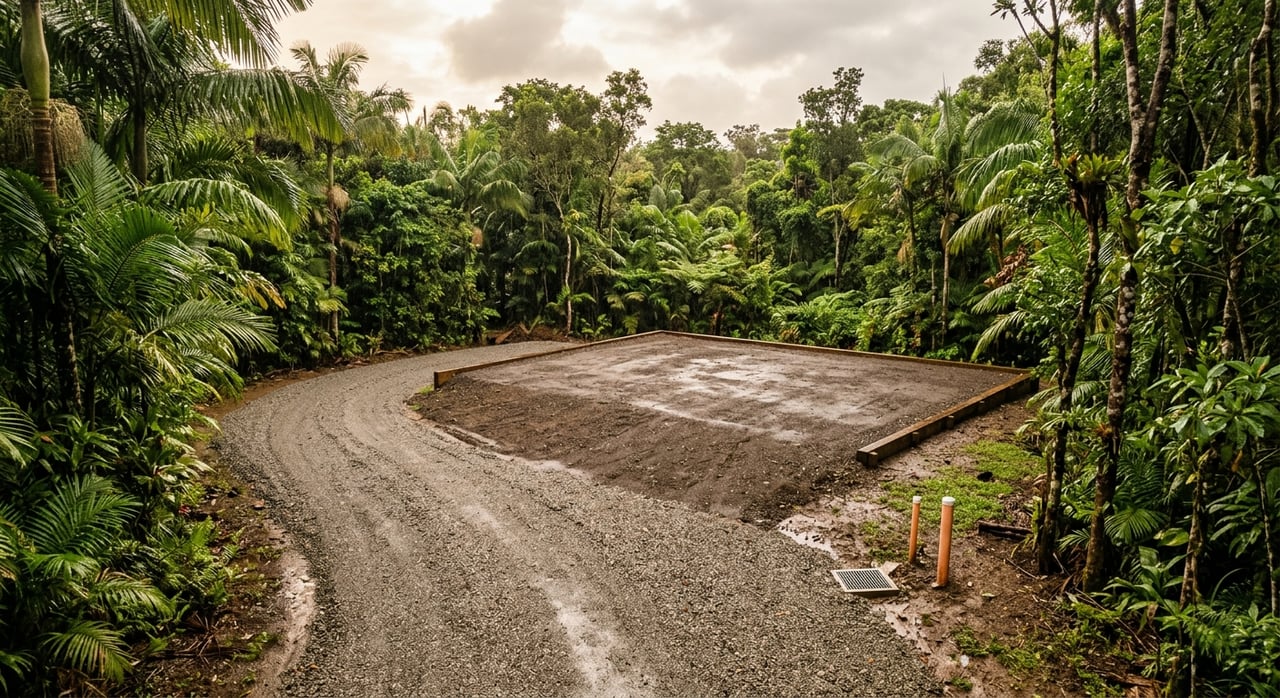
Beautiful drone images can attract attention, but in Bahía Ballena they need to do more than create mood. Because the climate is wet and the terrain can vary quickly, visuals should help prove the property’s actual condition. Buyers want to see what the parcel is really like on the ground.
That means your photos and drone footage should highlight slope, drainage patterns, vegetation cover, road frontage, boundary clues, and view corridors. Pretty angles are useful, but they should not hide the practical details that affect use and cost.
The strongest visuals show the property in relation to roads, nearby landmarks, and its broader natural setting. In a market tied closely to Marino Ballena and the Osa conservation landscape, context is part of the value. Buyers are often purchasing both the land and the experience of being there.
A clear visual package helps them understand whether the parcel fits their goals. That may mean a homesite, a conservation-minded hold, a small eco-cabin concept, or long-term land banking, depending on the documents.
Development language should be accurate, specific, and conditional. In Bahía Ballena, the gap between what seems possible and what is actually permitted can be significant. That is why broad promises can hurt a listing more than help it.
The safest approach is to describe supported use cases such as homesites, small eco-cabins, ranch or farm use, conservation-minded ownership, or long-term holding, but only when the documents support those options. If zoning, access, water, or permits have not been confirmed, do not present the land as ready for subdivision, tourism use, or commercial development.
Foreign buyers generally have the same rights as Costa Rican nationals except where law creates limits. The ZMT is one of the clearest examples because it operates through concession rather than standard fee-simple ownership. For cross-border buyers, this is not a minor legal footnote. It is a key part of understanding risk and value.
When your listing explains this in simple language, it signals professionalism. It also positions you as a seller who respects the buyer’s need for due diligence instead of trying to rush the story.
The most effective Bahía Ballena land listings answer the same core questions upfront. When buyers have to chase these answers, they often assume the file is weak or incomplete. A clearer presentation can improve both trust and momentum.
Here are the questions your listing should address as early as possible:
If you can answer these questions with documents and plain language, your land will stand out for the right reasons. In a market like Bahía Ballena, confidence comes from clarity.
The best land listings in Bahía Ballena are not the ones with the most dramatic wording. They are the ones that connect nature, legality, and feasibility in a calm, credible way. That is especially true in a destination shaped by biodiversity, protected coastal systems, and growing interest in eco-conscious ownership.
A better position for your land is simple: legally clear, access-transparent, water-aware, and eco-sensitive. If your listing tells that story well, you are far more likely to attract qualified buyers who understand what makes the property valuable.
If you want expert help presenting land in Osa with the right mix of market strategy, legal awareness, and local insight, Tropical Investments can help you position your property with clarity and confidence.

It would be our honor to help you find the perfect Costa Rica real estate opportunity that matches your lifestyle and interests. Connect with us to get started on your real estate in Costa Rica journey!

Plaza Coco Uvita Local 6 2nd FL, Bahia Ballena, Puntarenas 60504, Costa Rica