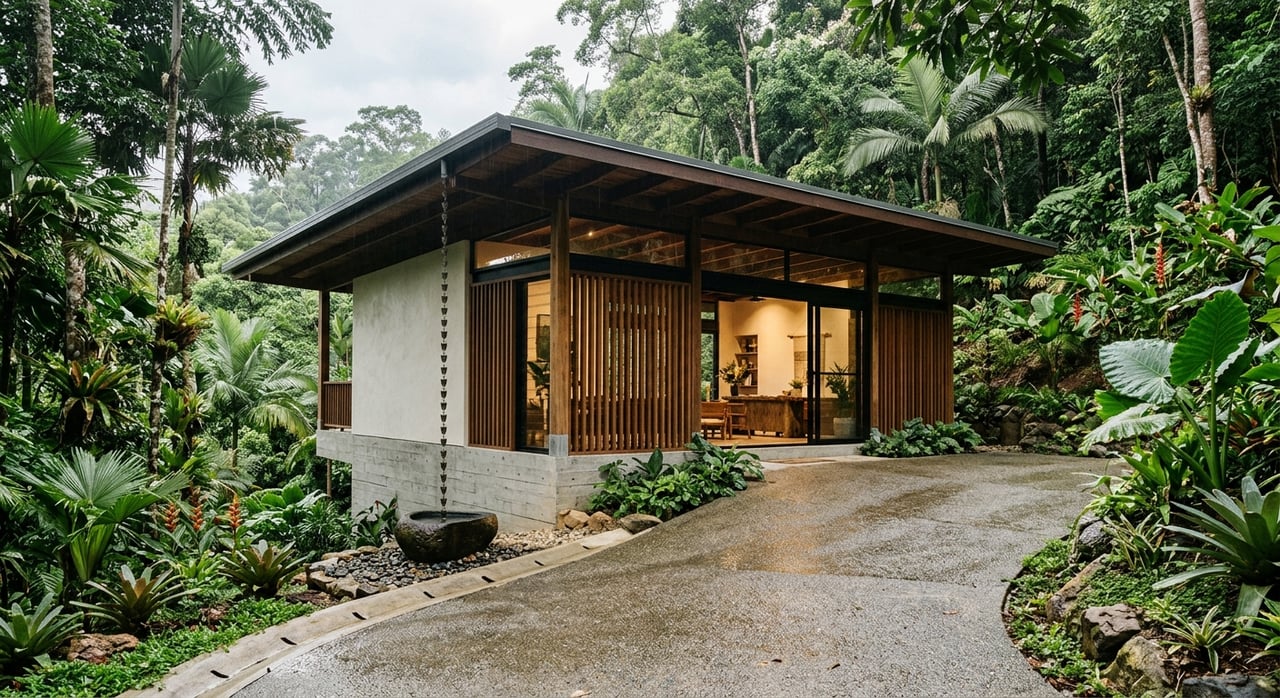
Planning A Boutique Eco Retreat Investment In Ojochal
June 11, 2026
June 11, 2026
If you are thinking about building a boutique eco retreat in Ojochal, the opportunity can be exciting and complex at the same time. This part of Costa Rica’s Southern Pacific appeals to travelers who value nature, quiet, and a more grounded experience, but that same appeal comes with real limits around land use, water, access, and environmental review. If you want to plan wisely, you need to understand what makes a site workable before you fall in love with the view. Let’s dive in.
Ojochal sits within a broader Southern Pacific region where conservation and rural tourism shape the local identity. In the Osa area, the destination mix includes places such as Marino Ballena, Piedras Blancas, the Terrabá-Sierpe wetland, the Golfo Dulce Forest Reserve, and Caño Island. Costa Rica’s tourism authority also frames Osa as a cradle of rural tourism.
That context matters because it points to the kind of project that fits best. In practical terms, a boutique eco retreat in Ojochal is more likely to align with the market when it stays small, landscape-sensitive, and conservation-forward. A resort-style concept may be less compatible with the area’s tourism identity and environmental setting.
A beautiful parcel is not always a buildable parcel. Before you think about design, branding, or guest experience, you need to confirm whether the lot can actually support a hospitality use.
The Municipality of Osa maintains a cantonal plan regulador with zoning maps, land-use rules, construction regulations, and a coastal plan regulator. That means parcel-level use should be verified directly before you assume a property can support lodging, villas, cabins, or another retreat concept.
Zoning should be one of your first diligence steps. It helps determine whether the land use you have in mind is even allowed and what limits may apply to construction, density, setbacks, and site design.
This is especially important in an area where conservation, rural character, and coastal planning overlap. A listing description or informal local opinion is not enough. You want your intended use reviewed against the official municipal framework.
Access is about more than whether a road appears on a map. You need to understand how guests, staff, service vehicles, and construction teams will reach the property year-round.
Route 34 remains a strategic corridor for Costa Rica’s Southern Zone, and roadway and bridge work in Osa continues to support regional connectivity. Even so, hill-site feasibility still depends heavily on the condition of the last-mile road, slope stability, and drivability during the rainy season.
Costa Rica’s development rules through INVU require projects to match zoning, fit the site’s natural characteristics, avoid foreseeable flood or landslide risk, and provide adequate access and services. The same framework expects design to respect terrain, vegetation, and the surrounding landscape.
For an eco retreat, this is not just about compliance. It is also about protecting your budget and preserving the guest experience. A site that demands excessive grading, retaining, or road work can become expensive and may weaken the very nature-based value you are trying to create.
The Marino Ballena area is officially described as hot, rainy, and very humid, with a rainy season that runs from mid-April to mid-December. If you are evaluating hillside land near Ojochal, that climate profile should influence every major decision.
You will want to think early about drainage, erosion control, road durability, and how the site behaves in peak wet months. Designs that work well on paper can struggle in the field if runoff, slope movement, or muddy access were underestimated.
A strong eco retreat concept in this region should function well when conditions are wet, not just when the weather is ideal. That includes practical questions such as:
A quieter, smaller-footprint project on suitable terrain is often the safer path. In this market, simple and well-sited usually performs better than overbuilt.
For hospitality land in Ojochal, water is one of the biggest decision points. You should not treat it as something to solve later.
INVU states that development must have certified potable water availability from AyA, an ASADA, or another operator. If there is no existing supply, the project may need a concession or well route through the Dirección de Agua.
A verbal statement about water is not enough for serious investment planning. Before closing, you should understand whether there is a documented availability path and whether that path supports your intended scale.
This matters for both feasibility and timing. If your retreat concept depends on a service that is uncertain, delayed, or limited, your whole business model can shift.
Wastewater and discharge cannot be an afterthought in a boutique eco retreat project. Costa Rica’s Ministry of Health and water authorities regulate treatment, reuse, and discharge, so your site planning should account for this from the beginning.
That means looking beyond the guest units themselves. You also need to understand how kitchens, laundry, common areas, and staff operations affect the wastewater solution.
Not every parcel handles infrastructure the same way. Slope, soil, water features, and buildable area all influence what kind of wastewater approach may be realistic.
If your goal is a credible eco-forward project, this is also where operations and branding connect. A retreat that markets sustainability should be able to support that claim with thoughtful water efficiency and treatment planning.
In Ojochal and the wider Osa region, environmental controls are not a side issue. They can shape the buildable envelope long before you apply for a construction permit.
SETENA’s Viabilidad Ambiental is Costa Rica’s main environmental screening process for activities, works, and projects. Even a small retreat may require a formal environmental filing depending on how the project is classified and the conditions of the site.
SINAC, through ACOSA, manages forestry, wildlife, protected areas, and watersheds in the region. If your parcel sits near forest, streams, wetlands, or other sensitive habitat, you may face restrictions before development goes any further.
Costa Rica’s Forest Law also creates protection areas around water features. These include 100 meters around permanent springs, 15 meters on each side of rivers, streams, and arroyos in flat rural terrain, 10 meters in urban areas, and 50 meters where the terrain is rough.
Because of those rules, you should confirm the buildable area with a licensed surveyor and environmental legal guidance before any clearing or grading begins. A wide ocean view does not always equal a wide construction envelope.
If a parcel reaches the coast, the Maritime-Terrestrial Zone adds another legal layer. The first 200 meters from the ordinary high-tide line fall within the ZMT, and the first 50 meters are public zone.
Many inland hill parcels are outside that regime, but any property with coastal reach or ambiguous boundaries deserves extra review before closing. This is one of those details that can materially change the value and use of the land.
A boutique retreat is not just a real estate purchase. It is an operating business, and that means permits matter.
For commercial or service establishments, Costa Rica’s Ministry of Health requires a Permiso Sanitario de Funcionamiento. If the project will operate as a boutique hotel, cabins, villas, or another lodging product, ICT’s tourism recognition framework may also become relevant depending on the concept.
Many buyers focus first on whether they can build. That is important, but a hospitality project also has to function legally once it opens.
Your planning should account for environmental review, sanitary approval, infrastructure solutions, and the practical operating model. The earlier you align those pieces, the fewer surprises you are likely to face later.
In Ojochal, market fit is not only about architecture or room rates. It is also about how the project behaves within a conservation-oriented destination.
Costa Rica’s sustainability frameworks support eco-positioning, but local fit often comes down to daily decisions. Quiet guest management, low-noise infrastructure, dark-sky lighting, waste separation, and wildlife-sensitive landscaping can matter as much as branding.
For many investors, the safest path is a small-footprint retreat on already-cleared or lightly disturbed land with verified access, water, and wastewater solutions. That approach tends to fit both the regulatory environment and the local tourism identity more naturally.
It can also support a more refined guest experience. In a place like Ojochal, privacy, nature immersion, and thoughtful design often create more value than simply adding more units.
If you are narrowing options in Ojochal, keep your review focused on the items that can make or break the investment:
A disciplined process can save you time, money, and frustration. It can also help you identify the parcels that truly support a boutique eco-retreat concept, rather than just looking the part.
If you are exploring land or hospitality opportunities in Ojochal, working with a local team that understands investment logic, site constraints, and sustainability can make your search far more efficient. To explore curated opportunities and informed guidance in Costa Rica’s Southern Pacific, connect with Tropical Investments.

It would be our honor to help you find the perfect Costa Rica real estate opportunity that matches your lifestyle and interests. Connect with us to get started on your real estate in Costa Rica journey!

Plaza Coco Uvita Local 6 2nd FL, Bahia Ballena, Puntarenas 60504, Costa Rica